Авторы и права: Хейтем Хамди
Перевод: Д.Ю.Цветков
Пояснение:
Почему хвост кометы R3 (PanSTARRS) имеет такую структуру?
Новая яркая гостья внутренней области Солнечной системы –
комета C/2025 R3 (PanSTARRS),
уже выбросила
впечатляющий
поток светящегося газа.
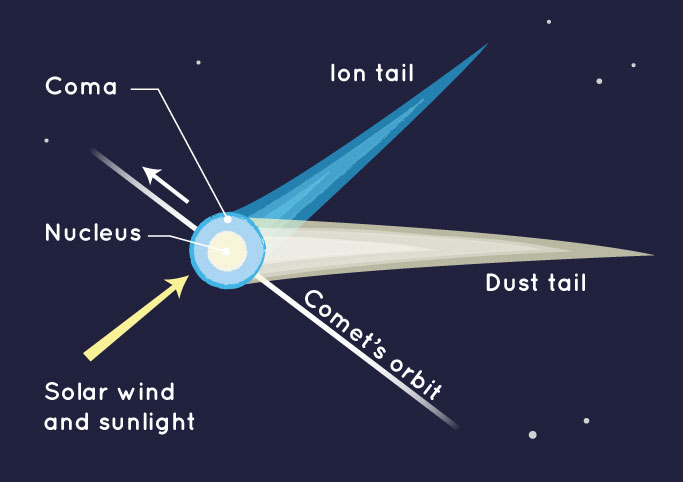
Этот хвост начинается от невидимого
ядра
из грязного льда размером в несколько километров.
Ядро нагревается Солнцем и
выбрасывает
облако нейтрального газа в
кому, которая дает
светло-зеленое свечение.
Газ, ионизованный
солнечным излучением,
отталкивается от
Солнца
солнечным ветром
и формирует ионный хвост, свет от которого имеет
светло-синюю окраску.
Структура
ионного хвоста
возникает из-за
постоянных изменений
солнечного ветра.
На
изображении, полученном из
Род-Айленда в
США два дня назад, запечатлен протянувшийся на несколько градусов хвост
кометы R3 (PanSTARRS).
Комету R3 (PanSTARRS)
в следующие 10 дней можно будет увидеть перед рассветом из северного полушария,
а затем она перейдет на южное небо.
Фотогалерея:
Комета R3 в 2026 году
1999 2000 2001 2002 2003 2004 2005 2006 2007 2008 2009 2010 2011 2012 2013 2014 2015 2016 2017 2018 2019 2020 2021 2022 2023 2024 2025 2026 |
Январь Февраль Март Апрель Май Июнь Июль Август Сентябрь Октябрь Ноябрь Декабрь |
NASA Web Site Statements, Warnings, and Disclaimers
NASA Official: Jay Norris. Specific rights apply.
A service of: LHEA at NASA / GSFC
& Michigan Tech. U.
|
Публикации с ключевыми словами:
comet - кометы
Публикации со словами: comet - кометы | |
См. также:
Все публикации на ту же тему >> | |