
|

Credit & Copyright: Martin Pugh
Explanation:
Very faint planetary nebula Abell 7 is about 1,800 light-years distant.
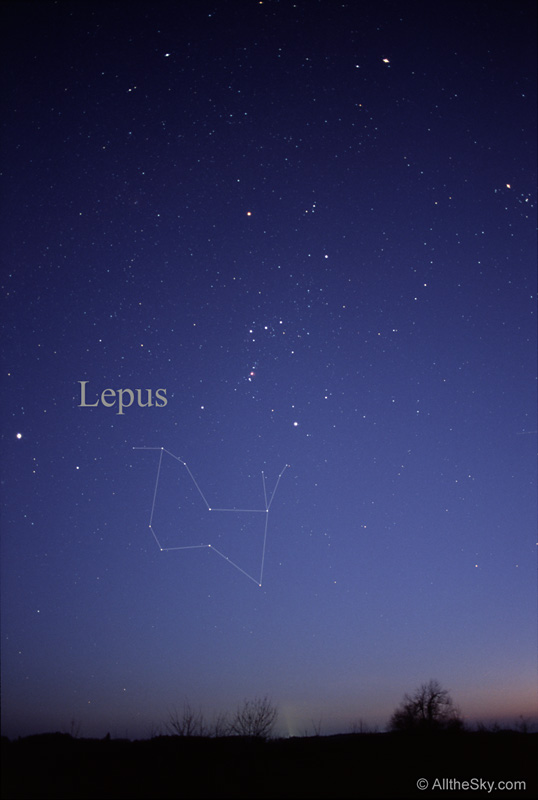
It lies just south of Orion in planet Earth's skies toward the
constellation
Lepus, The
Hare.
Posing with scattered Milky Way stars, its
generally
simple spherical shape about 8 light-years in diameter is revealed in
this deep telescopic image.
The beautiful and complex shapes
seen within the cosmic cloud are visually
enhanced by the use of long exposures and
narrowband filters
that capture emission from hydrogen and oxygen atoms.
Otherwise Abell 7 would be much
too faint to be appreciated by eye.
A
planetary nebula
represents a very brief final phase
in stellar evolution that our own Sun will experience 5 billion
years hence,
as the nebula's central, once sun-like star shrugs off its outer layers.
Abell 7 itself is estimated to be 20,000 years old.
But its central star, seen here as a
fading
white dwarf,
is some 10 billion years old.
|
January February March April May June July |
| ||||||||||||||||||||||||||||||||||||||||||||||||
NASA Web Site Statements, Warnings, and Disclaimers
NASA Official: Jay Norris. Specific rights apply.
A service of: LHEA at NASA / GSFC
& Michigan Tech. U.
Based on Astronomy Picture
Of the Day
Publications with keywords: planetary nebula
Publications with words: planetary nebula
See also:
- APOD: 2026 May 28 Б NGC 1514: The Crystal Ball Nebula
- APOD: 2026 March 4 Б Shapley 1: An Annular Planetary Nebula
- APOD: 2026 February 25 Б The Egg Nebula from the Hubble Telescope
- APOD: 2026 February 3 Б Red Spider Planetary Nebula from Webb
- APOD: 2024 April 30 Б GK Per: Nova and Planetary Nebula
- APOD: 2025 August 31 Б NGC 7027: The Pillow Planetary Nebula
- APOD: 2025 August 22 Б A Tale of Two Nebulae