Рейтинг публикаций
|
На данной неделе 18 октября Меркурий и Юпитер достигнут стояния с переходом к прямому движению Оценка: 5.0 [голосов: 1]
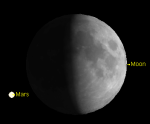
На данной неделе 28 февраля произойдет покрытие Луной (Ф= 0,58+) Марса при видимости на севере Европейской части страны, а 2 марта Венера пройдет в полградуса севернее Юпитера Оценка: 5.0 [голосов: 1]
На данной неделе 13 марта произойдет покрытие Луной (Ф= 0,63-) звезды сигма Скорпиона при видимости в Сибири. 14 марта наступит максимум действия метеорного потока гамма-Нормиды (ZHR= 6) из созвездия Наугольника Оценка: 5.0 [голосов: 1]
На данной неделе 23 января Уран достигнет стоянии с переходом к прямому движению, а Луна (Ф= 0,03+) пройдет южнее Венеры и Сатурна Оценка: 5.0 [голосов: 1]
Этот ландшафт с величественными горами и ледяными равнинами простирается до горизонта маленького далекого мира. Он был запечатлен с расстояния около 18 тысяч километров, когда аппарат "Новые Горизонты" посмотрел назад на Плутон через 15 минут после ближайшего сближения 14 июля 2015 года. Оценка: 5.0 [голосов: 1]
Журнал "Небосвод" для любителей астрономии Оценка: 5.0 [голосов: 1]
На данной неделе комета P/Pons-Brooks (12P) будет наблюдаться близ Юпитера Оценка: 5.0 [голосов: 1]
На данной неделе 31 мая Меркурий пройдет в 1,3 гр. южнее Урана, а Луна (Ф= 0,43-) пройдет южнее Сатурна (покрытие при видимости в Южной Америке). 1 июня Луна (Ф= 0,34-) покроет Нептун при видимости в Африке Оценка: 5.0 [голосов: 1]
На данной неделе 16 января Луна (Ф= 0,38-) достигнет нисходящего узла своей орбиты, а 22 января Венера пройдет в 0,3 гр. южнее Сатурна Оценка: 5.0 [голосов: 1]
Почему у этой туманности такая сложная структура? Космический телескоп "Джеймс Вебб" получил исключительно подробные изображения туманности, которую породила похожая на Солнце звезда. NGC 6072 оказалась одной из самых необычных и обладающих самой сложной структурой планетарной туманностью. Это изображение получено в инфракрасном диапазоне, красным цветом показано излучение холодного водорода. Оценка: 5.0 [голосов: 1] |
|